

Quick guide: 5 approval workflow tools for regulated marketing
- Simple Admation — purpose-built marketing approval workflow software with native compliance controls, on-demand AI Compliance Checking and automated audit trails
- Adobe Workfront — enterprise work management, with Frame.io now the review surface
- Ziflow — online proofing with compliance checklists and AI-assisted review
- Aprimo — content operations platform with AI compliance and regulatory integrations
- Bynder — digital asset management with integrated approval routing
How we chose the approval workflow tools for regulated industries
Marketing teams in financial services, insurance, healthcare and other regulated sectors face a specific operational challenge: every campaign asset needs documented sign-off before it goes live. Miss a required disclosure, skip a mandatory reviewer, or lose track of version history, and you are looking at regulatory exposure.
In Australia, that exposure is concrete. Financial services marketing sits under ASIC's design and distribution obligations and its guidance on misleading conduct, with APRA's accountability regime placing named individuals on the hook for governance failures. Therapeutic goods advertising is governed by the TGA Advertising Code. Privacy obligations apply across every sector. In each case the regulator's first request is the same: show us who approved what, when, and on what basis. A team that cannot produce that record quickly has a problem regardless of whether the underlying content was compliant. See marketing risk and compliance for how this shapes the approval process.
We evaluated marketing approval workflow software against the criteria that matter most when compliance is non-negotiable:
- Mandatory approval pathways — can reviewers be required in sequence, with no option to bypass?
- Compliance checklists — can approvers be asked to confirm specific regulatory requirements before sign-off?
- Automated audit trails — does every review action get logged with timestamps and user attribution?
- Multi-stakeholder routing — can workflows route assets through legal, compliance, brand and external partners?
- Version control — can you track exactly which version was approved and when?
- AI content review — can the platform check content against defined rules before it reaches a human reviewer, and is the result recorded?
- Integration with creative workflows — does the tool connect to how your team already creates content?
- Enterprise governance — are role-based permissions, access controls and data security built in?
The 5 approval workflow tools for regulated marketing
1. Simple Admation: purpose-built approval workflow software for compliance-driven marketing teams
Simple Admation is a marketing workflow platform built specifically for teams where compliance documentation is a legal requirement, not a nice-to-have. The platform covers the full production lifecycle — from structured creative briefing through online proofing, multi-stage approval routing and automatic audit trail generation — in one connected system.
What sets Simple Admation apart for regulated industries is that compliance controls are native to how the platform works, not features added later. Mandatory approval pathways cannot be bypassed. Compliance checklists require reviewers to confirm specific regulatory requirements before sign-off becomes available. Every review action is logged automatically with timestamps and user attribution, ready for export when regulators ask for documentation.
Simple Admation is also built and supported in Australia, with implementation and support teams operating in Australian business hours — a practical consideration for regulated teams whose compliance deadlines do not accommodate an overnight support queue.
Simple Admation is used by marketing teams at organisations including Bupa, HESTA, NIB, Great Southern Bank, RACV, Woolworths Everyday Insurance and Tourism Australia across financial services, superannuation, insurance, healthcare and retail. See our customers for the full list. The platform connects briefing, production, approval and asset storage in one workflow — so the handoff between "approved" and "stored in the right place" happens without manual steps.
Simple Admation features
- Structured briefing templates — customisable online brief templates capture mandatory fields, deliverables, deadlines and compliance requirements before creative work begins, reducing revision rounds caused by incomplete information
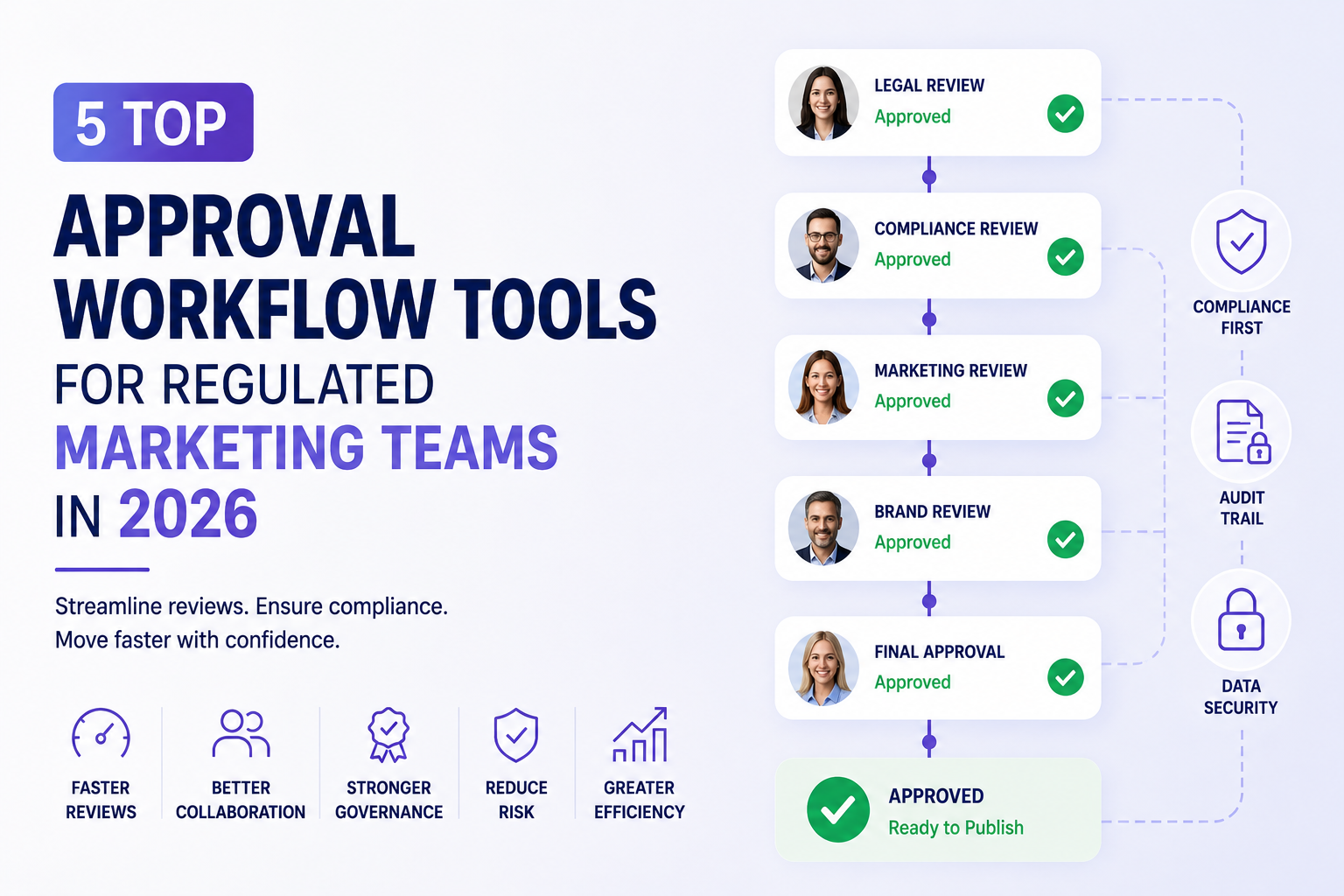
- Multi-stage approval routing — configure sequential or parallel approval templates that route assets through internal teams, legal, compliance and external stakeholders in the required order
- Compliance checklists — mandatory completion checklists require approvers to confirm specific compliance checks before sign-off is possible, ensuring regulatory steps cannot be skipped
- AI Compliance Checking — run an on-demand AI check against uploaded compliance documents or pre-built regulatory rule sets before an asset enters human review. See AI Compliance Checking for full detail
- Online proofing with markup tools — reviewers annotate directly on assets using a full online proofing toolkit, with all feedback consolidated in one view rather than scattered across channels
- Automated audit trails — every action is logged in the audit trail with user attribution and timestamps, exportable for regulatory audits
- Integrated digital asset management — approved assets flow directly into Simple Asset Manager with version control, permissions and expiry controls
How AI Compliance Checking works in Simple Admation
AI Compliance Checking is on-demand rather than automatic. A team member runs a check on any asset before it is formally submitted for approval. They upload the compliance document they want to check against — brand guidelines, regulatory codes, product rules, internal legal standards — or select from pre-built regulatory rule sets. The check does not run silently in the background and it does not pre-screen or auto-approve submissions.
The AI evaluates the asset against every selected rule and returns a four-metric findings summary: Rules Passed, Rules Failed, Rules Uncertain, and Average Confidence %. Alongside the metrics it returns a plain-language summary of what passed, what failed and why. Every check result is recorded in the Simple Admation audit trail alongside all subsequent human reviewer decisions.
The design point is deliberate. In a regulated environment, an automated check that cannot be explained or evidenced is a liability rather than an asset. Because Simple Admation checks against documents and rule sets your compliance team supplies, every finding traces back to a specific rule, and the confidence score tells a reviewer where human judgement is still required. The AI narrows the review burden; it does not replace the sign-off.
Simple Admation pros and cons
Pros:
- Compliance controls are built into the core workflow, not bolted on as optional features
- Connects briefing, proofing, approval and asset management in one platform rather than requiring separate tools
- AI compliance checks run against documents and rule sets you supply, with results recorded in the audit trail
- Australian-built, with support in Australian business hours
- Proven in regulated environments with documented use by financial services, superannuation and insurance organisations
Cons:
- The structured workflow approach suits teams that need governance; teams wanting lightweight task management may find the structure more than they need
- Implementation requires defining your approval pathways and compliance rule sets upfront
- The platform focuses on marketing workflows specifically, so teams looking for general project management may want broader tools
2. Adobe Workfront: enterprise work management with proofing capabilities
Adobe Workfront is an enterprise work management platform supporting multi-stage approval workflows with role-based routing, automated reminders and version tracking. It can be configured to support compliance-heavy approval processes with audit trails, time-stamped comments and permission controls.
An important change for teams evaluating Workfront in 2026: Frame.io has replaced Workfront Proof as the review surface, with approval decisions syncing between the two platforms. Customers who purchased before March 2026 may run both concurrently during transition. Adobe has also added AI-powered content review that flags assets falling out of step with brand standards. Teams already invested in Adobe Creative Cloud will find the integration reduces friction; teams that are not may be buying more platform than the approval problem requires.
Adobe Workfront features
- Multi-stage approval workflows — sequential and parallel review stages with dependencies between stages
- Frame.io review surface — proofing and approval now handled through Frame.io, synced with Workfront
- AI-powered content review — automated brand-standard checks during the review process
- Creative Cloud integration — connects with Adobe applications for teams using that toolset
Adobe Workfront pros and cons
Pros:
- Part of a broader enterprise work management platform
- Deep integration with Adobe Creative Cloud and Experience Manager
- Supports configuration for compliance-oriented workflows
Cons:
- Compliance features require configuration rather than being native to the workflow
- The Workfront Proof to Frame.io transition adds change-management overhead for existing customers
- Implementation complexity can require dedicated administrator resources
3. Ziflow: online proofing with compliance workflow support
Ziflow is an online proofing platform designed for creative teams managing complex approval workflows. It includes customisable workflow stages, standardised checklists, and audit trail logging that tracks every decision, comment and revision. Role-based permissions, real-time status tracking and page-level approval on multi-page documents support legal and compliance review.
Ziflow has added AI capability under the ZiflowAI banner, including a review assistant that surfaces common compliance issues such as missing disclaimers before launch. The platform holds SOC 2 Type II and ISO 27001 certification. It remains focused on the proofing and review stage specifically — briefing, project management and asset storage sit outside its scope.
Ziflow features
- Customisable approval workflows — define workflow stages and routing rules based on your review requirements
- Compliance checklists — standardised checklists ensure assets pass required checks before progressing
- ZiflowAI review assistant — AI-assisted detection of common compliance issues during review
- Audit trail logging — records decisions, comments and revisions for regulatory documentation
Ziflow pros and cons
Pros:
- Deep, mature functionality in proofing and review workflows
- Checklist functionality and page-level approval suit detailed compliance review
- Version comparison and auto-compare help track changes across iterations
Cons:
- Primarily a proofing tool rather than a full marketing workflow platform
- Briefing and project management typically require additional tools
- Asset storage and distribution handled separately from the proofing workflow
4. Aprimo: content operations with regulatory workflow support
Aprimo is a content operations platform combining digital asset management, workflow automation and content lifecycle management. It supports regulatory compliance through centralised storage, workflow routing and audit trail capabilities, and connects content management with production workflows to maintain a single source of truth for approved materials.
For financial services specifically, Aprimo offers AI-powered compliance review within the platform and maintains integrations with specialist compliance tools including Red Oak Compliance Solutions for advertising review, and Red Marker for AI-powered advertising compliance. Teams should note that these regulatory capabilities are oriented to US frameworks such as FINRA and SEC Rule 17a-4 — relevant context for Australian teams assessing fit against ASIC and APRA obligations.
Aprimo features
- Workflow automation — configure review and approval routing based on content type and requirements
- Centralised asset management — single repository for approved content with version control
- AI compliance review — machine-learning risk identification within the platform
- Compliance integrations — connects with specialist compliance tools for regulated industries
Aprimo pros and cons
Pros:
- Connects content management with workflow in one platform
- Established integrations with compliance-specific tools
- Enterprise-scale capabilities for large content operations
Cons:
- Regulatory tooling is oriented to US frameworks rather than Australian obligations
- The platform covers broad content operations, which includes capabilities beyond approval workflow
- Implementation scope can be extensive for teams focused primarily on approval workflows
5. Bynder: digital asset management with approval workflow
Bynder is a digital asset management platform that includes workflow functionality for briefing, proofing and approving digital assets. Teams can submit creative briefs, annotate directly on assets, and manage approval processes with version control. Approved assets route directly into the DAM for distribution.
Bynder's centre of gravity is asset management rather than governed approval. For teams whose primary problem is finding, controlling and distributing approved assets, that emphasis is an advantage. For teams whose primary problem is proving that the right people signed off in the right order, compliance-specific controls such as mandatory checklists generally require configuration.
Bynder features
- Asset workflow — brief, review and approve digital assets with annotation tools and version tracking
- DAM integration — approved assets route directly to the digital asset management library
- Configurable workflows — define review stages and approval routing for your team's process
Bynder pros and cons
Pros:
- Connects approval workflows with strong digital asset management
- Annotation and version comparison support collaborative review
- Established platform with a large enterprise customer base
Cons:
- Primary focus is asset management rather than compliance-driven approval workflows
- Compliance-specific features such as mandatory checklists may require additional configuration
- Marketing project management typically handled through additional tools or integrations
Comparison table: approval workflow tools for regulated marketing
| Platform | Compliance checklists | Audit trails | Integrated DAM | AI content review | Native briefing |
|---|---|---|---|---|---|
| Simple Admation | Native | Native | Native | Document and rule-set based | Native |
| Adobe Workfront | Configurable | Yes | Via Experience Manager | Brand-standard checks | Yes |
| Ziflow | Native | Yes | No | ZiflowAI assistant | No |
| Aprimo | Via integration | Yes | Native | Yes | Yes |
| Bynder | Configurable | Yes | Native | Limited | Yes |
Capabilities assessed from vendor documentation current at August 2026. Platform capabilities change frequently — verify against current vendor information before making a purchase decision.
What features should regulated marketing teams look for in approval workflow software?
When compliance is a legal requirement rather than a preference, the approval workflow tool you choose needs specific capabilities that general project management software typically does not include.
Look for mandatory approval pathways that cannot be bypassed — not just optional review stages that someone can skip when a deadline is tight. Compliance checklists should require reviewers to confirm specific regulatory requirements before the system allows sign-off, ensuring critical steps happen every time.
Automated audit trails are essential. Every action — who reviewed, what they commented, when they approved, which version — should be logged automatically and be exportable for regulatory audits. If your team has to manually compile approval documentation, gaps will appear.
Consider how the tool handles multi-stakeholder routing. Regulated marketing often requires sign-off from internal teams, legal, compliance and sometimes external partners. The workflow needs to accommodate complex approval chains without forcing workarounds.
Where AI content review is offered, ask how the result is evidenced. A flag that cannot be traced to a defined rule, and does not appear in the approval record, does not help you demonstrate diligence to a regulator. The useful question is not whether a platform has AI, but whether its output becomes part of the compliance record.
How do approval workflows differ from general project management tools?
General project management tools model work as tasks with owners and due dates. Marketing approval workflows have a different structure: a single asset moves through multiple review stages, with different stakeholders providing feedback at each stage, and the approval itself is a governed decision with documentation requirements.
The tools your team uses for task tracking — assigning work, setting deadlines, managing capacity — are built for different problems than the tools you need for approval governance. A task management tool can tell you that a review is due. An approval workflow tool ensures the right reviewer sees the right version, captures their feedback in context, logs their decision, and routes the asset to the next required stage. See what Simple Admation is for how the two sit together in one platform, or the complete guide to marketing approval workflow for a full explanation of the process.
For regulated industries, this distinction matters. Your auditors do not need to see that a task was marked complete. They need to see who approved which version, when, and whether required compliance checks were confirmed.
Why Simple Admation is the purpose-built choice for regulated marketing approval workflows
Simple Admation gives marketing teams in regulated industries a workflow platform where compliance controls are native to how the system works. Mandatory approval pathways ensure required reviewers cannot be bypassed. Compliance checklists require approvers to confirm specific regulatory requirements before sign-off becomes available. AI Compliance Checking runs content against the compliance documents and rule sets your team supplies before human review, and the result is recorded alongside the human decision. Automated audit trails log every action with timestamps and user attribution, ready for export when documentation is needed.
The platform connects the full production lifecycle in one system. Structured briefing captures requirements before creative work begins. Online proofing consolidates feedback from all stakeholders in one view. Multi-stage approval routing moves assets through legal, compliance, brand and external partners in the required sequence. Approved assets flow directly into integrated digital asset management with version control and expiry controls.
Simple Admation is used by marketing teams at organisations including Bupa, HESTA, NIB, Great Southern Bank, RACV and Woolworths Everyday Insurance — teams where compliance documentation is a legal requirement, not a preference. It is built for how regulated marketing teams actually work, and built against the obligations Australian teams actually face. See how this applies in banking and finance, insurance and health and pharma.
FAQs about approval workflow tools for regulated marketing
Why do regulated industries need specialised approval workflow tools?
Regulated industries face legal requirements for documenting marketing approvals, and general project management tools are not built to meet them. A task tracker can record that a review was completed, but it cannot enforce a reviewer sequence, require a compliance confirmation before sign-off, or produce an export-ready record of who approved which version and on what basis. Purpose-built approval workflow software makes those controls native, so the compliance documentation is generated as work progresses rather than assembled afterwards.
How do compliance checklists work in approval workflows?
Compliance checklists require reviewers to confirm specific regulatory requirements before the system allows sign-off. In Simple Admation, you configure checklists for each approval stage, such as confirming required disclosures are present or that legal has reviewed claims. Reviewers must complete the checklist before their approval is accepted, ensuring critical steps cannot be skipped under deadline pressure.
What should regulated marketing teams look for in AI compliance checking?
The useful question is not whether a platform offers AI, but whether its output can be evidenced. Look for checks that run against compliance documents and rule sets your own team supplies, so every finding traces back to a specific rule rather than a general risk model. Look for a confidence measure that tells reviewers where human judgement is still required. Most importantly, confirm the check result is written into the approval record itself, because a flag that does not appear in the audit trail does nothing to demonstrate diligence to a regulator.
What should be included in an audit trail for marketing approvals?
A complete audit trail records every action in the approval process: who uploaded which version, what feedback each reviewer provided, when approvals were given, and what compliance checks were confirmed. Simple Admation logs all of this automatically with timestamps and user attribution, exportable in formats suitable for regulatory audits.


