

The start of the year is often filled with planning sessions and strategy discussions about what marketing could achieve.
But smart marketing teams focus on something more practical.
They use the first couple of months of the year to get operations right.
Early in the year—before campaign volume and delivery pressure build—is when high-performing teams make decisions that determine whether marketing runs smoothly or starts to strain by mid-year. These decisions are not about creative ambition. They are about control.
They are about how work flows, how approvals happen, and how risk is managed.
Teams that delay these decisions rarely realise what’s broken until delivery pressure hits. Campaigns start slipping. Creative teams become overloaded. Marketing approvals slow down. Compliance and brand risk increase. By then, fixing the problem is expensive and disruptive.
That’s why strong marketing operations teams use the start of the year to step back, review how work actually moves through the organisation, and fix weaknesses before volume increases.
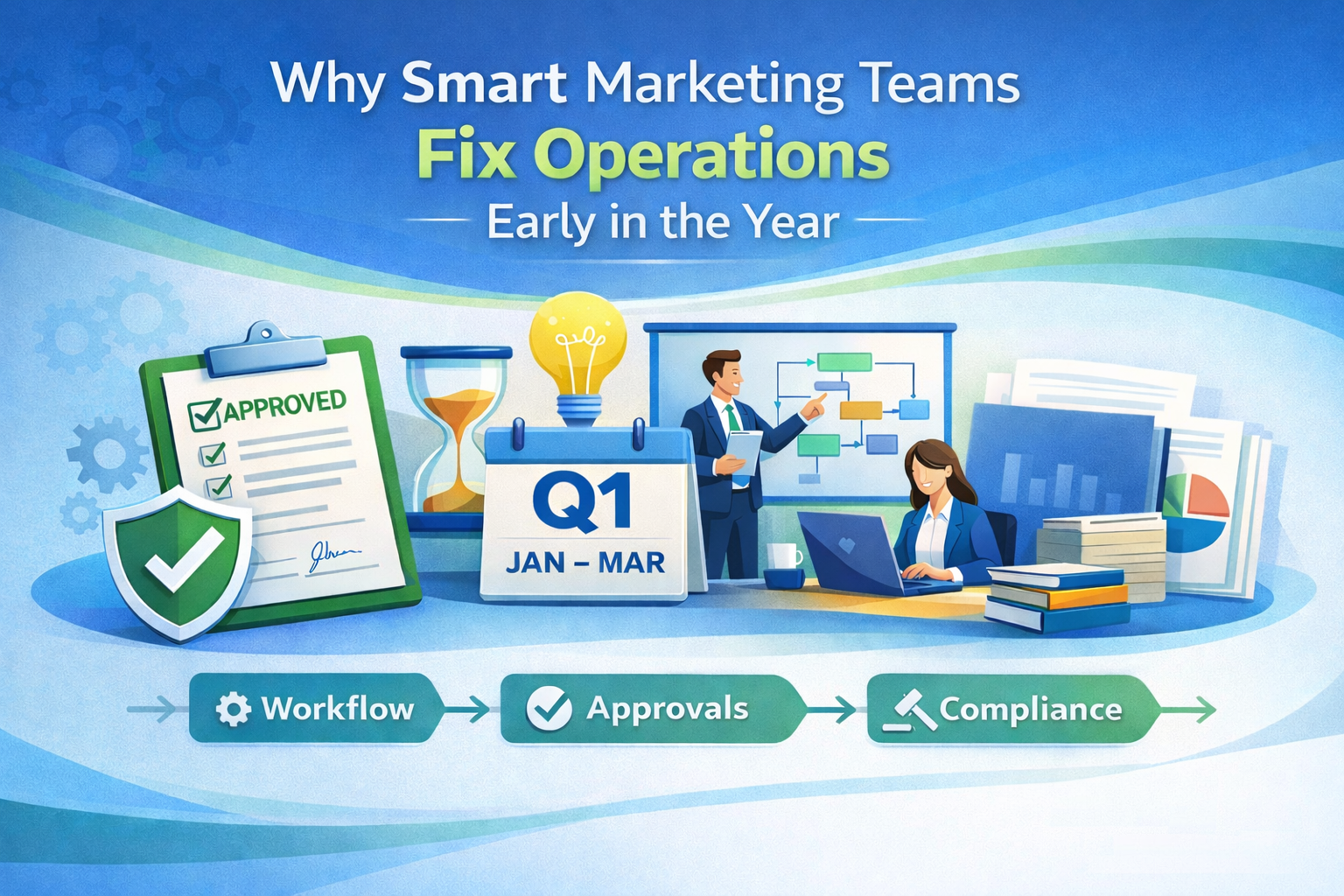
Why the Start of the Year Matters for Marketing Operations
The first few months of the year provide a rare opportunity to improve marketing operations before execution mode takes over.
This is when effective teams:
- Review how creative projects move from brief to approval to release
- Identify where approval workflows slow down or break
- Clarify brand, legal, and compliance responsibilities
- Standardise processes that support efficiency and scale
This approach aligns closely with best practice marketing operations models outlined in Simple’s overview of marketing operations and workflow management:
👉 https://www.simple.io/blog/what-is-marketing-operations
Once teams move deeper into the year, focus shifts to delivery. At that point, redesigning workflows or changing marketing project management software becomes risky and disruptive.
Decisions made early have a lasting impact on delivery speed, governance, and confidence for the rest of the year.
People: Define Ownership Across the Workflow Early
Marketing operations problems are rarely caused by poor performance. They are usually caused by unclear ownership across the workflow.
The start of the year is the right time to fix this.
Clarify Who Owns Each Step
As workload increases, gaps in ownership quickly turn into delays and risk.
Common issues include:
- Briefs being approved without the right information
- Feedback coming from too many stakeholders, or the wrong ones
- Legal or compliance reviews happening too late
Strong teams clearly define:
- Who owns briefing and scope
- Who provides creative input
- Who approves brand alignment
- Who signs off for compliance or regulatory requirements
This type of role clarity is a core principle behind effective project management for creatives, where accountability is built into the workflow rather than managed manually:
👉 https://www.simple.io/blog/guide-to-creative-project-management
Without clear ownership, even the best tools become task lists rather than true workflow systems.
Process: Build Approval Workflows That Hold Up Under Pressure
Many marketing workflows appear to work when demand is low. They fail when volume increases.
Mature teams design workflows that still hold up under pressure.
Standardise Approval Steps Early
Approval workflows should be predictable and repeatable.
Processes worth locking in early include:
- Standardised briefing templates
- Clear approval sequences and sign-off rules
- Defined escalation paths
- Version control for creative assets
In regulated industries, these steps support marketing compliance and audit readiness.
In other industries, they improve efficiency and reduce delays.
Simple’s breakdown of marketing approval workflows highlights why consistency and visibility matter as volume grows:
👉 https://www.simple.io/blog/marketing-approval-workflows
Reduce Rework by Fixing the Front End
Most approval delays start with poor project briefs and unclear requirements.
High-performing teams use the early part of the year to:
- Standardise briefing inputs
- Define what “ready for approval” looks like
- Align stakeholders before work begins
This reduces unnecessary review cycles and strengthens the creative workflow.
Decide What Needs Approval — and What Doesn’t
Not every asset requires the same level of scrutiny.
Before volume increases, smart teams define:
- What requires full compliance or legal review
- What only needs brand approval
- What can move quickly with minimal oversight
This keeps approvals proportionate and avoids bottlenecks later in the year.
Technology: Support the Workflow, Don’t Fragment It
Technology should reinforce how work flows, not complicate it.
In many organisations:
- Creative projects are tracked in one tool
- Approvals happen in email
- Compliance records sit somewhere else
This fragmentation is where inefficiency, errors, and risk appear.
Review Whether Tools Support the Full Approval Process
The start of the year is the right time to assess whether your tools:
- Support end-to-end creative workflow
- Embed marketing approvals into project delivery
- Maintain clear audit trails
- Ensure the correct versions are reviewed and approved
Marketing project management software should support the full lifecycle of creative assets—from brief to approval to release.
This is where platforms like Admation are designed to help, by combining marketing project management, approval workflows, and compliance controls in one system:
👉 https://www.simple.io/products/simple-admation
Audit Trails Protect More Than Compliance
Audit trails are not just for regulators. They protect teams.
Clear records of who approved what, when, and why:
- Reduce organisational risk
- Improve accountability
- Remove doubt when issues arise
This is especially important in regulated environments, where marketing teams must be able to demonstrate compliance long after campaigns have launched.
Automation Should Support Process, Not Replace It
Automation works best when it supports a clearly defined process.
Without structured workflows:
- Automation adds complexity
- Errors are harder to detect
- Compliance and brand risk increase
Strong teams focus first on:
- Clear approval steps
- Consistent workflows
- Defined responsibilities
Only then do they introduce automation to remove manual effort safely.
Why This Review Matters — Regardless of Industry
Whether you operate in a highly regulated environment or a fast-moving commercial one, the underlying challenge is the same:
As volume increases, weak workflows get exposed.
The start of the year provides the space to review:
- How creative projects are requested and prioritised
- How approvals flow across brand, legal, and compliance
- Where delays, rework, or risk appear
This clarity enables confident decisions—about process, structure, and the tools used to manage creative projects and approvals.
Early Decisions Shape Delivery, Compliance, and Efficiency All Year
The difference between teams that struggle mid-year and teams that stay in control is not effort.
It’s operational discipline.
The start of the year is the last period when marketing leaders can calmly assess workflows, approvals, and governance before delivery pressure takes over.
Teams that use this time well benefit from:
- Faster, clearer marketing approvals
- Stronger marketing compliance and brand governance
- More efficient creative workflows
- Less rework and fewer last-minute fixes
Smart marketing teams don’t wait for problems to surface.
They fix the foundations early.
Start With a Workflow Review
If your team is already feeling approval delays, rework, or compliance pressure, the best next step isn’t another planning session.
It’s a workflow review.
Start by:
- Mapping how creative work moves today
- Identifying where approvals slow down or break
- Assessing whether your tools truly support compliance and scale
From there, you’ll be in a much stronger position to decide whether your current processes and platforms are fit for the year ahead — or whether it’s time to explore marketing project management and approval solutions designed for structured, compliant workflows.
Learn how Simple Admation supports marketing workflows, approvals, and compliance. Chat with our marketing operation specialists today!